
Featured place
Lewes Castle
A Norman fortress with two mounds, and the best place to understand why Lewes looks the way it does.
The castle does not simply sit in Lewes; it explains it. William de Warenne built it after the Norman Conquest on the high ground above the settlement. Sussex Past describes an early timber stronghold, followed by stone and flint as Norman control hardened. Lewes is unusual: it is one of only two castles in England with two mounds.
The view
Climbing to the Keep is part of the visit. From the top, the shape of Lewes makes sense: tight streets, steep changes in level, the valley of the Ouse and the South Downs beyond. Few places show a town's history so clearly in its layout.
The museum
Next door, the Museum of Sussex Archaeology takes the story much further back, with finds from prehistoric to medieval Sussex. A model of the town and a short film help connect the objects to the landscape outside.
Visiting
Opening days, prices and events change with the seasons, so we do not list them here. Check Sussex Past before you travel, especially outside the summer or if you plan to combine the castle with Anne of Cleves House.
At a glance
- Address
- 169 High Street, Lewes BN7 1YE
- Built
- 11th century, after the Norman Conquest
- Builder
- William de Warenne
- Unusual because
- It has two castle mounds
- Also here
- Museum of Sussex Archaeology
- Details checked
- 27 August 2026
Visiting information Directions
Find Lewes Castle
-
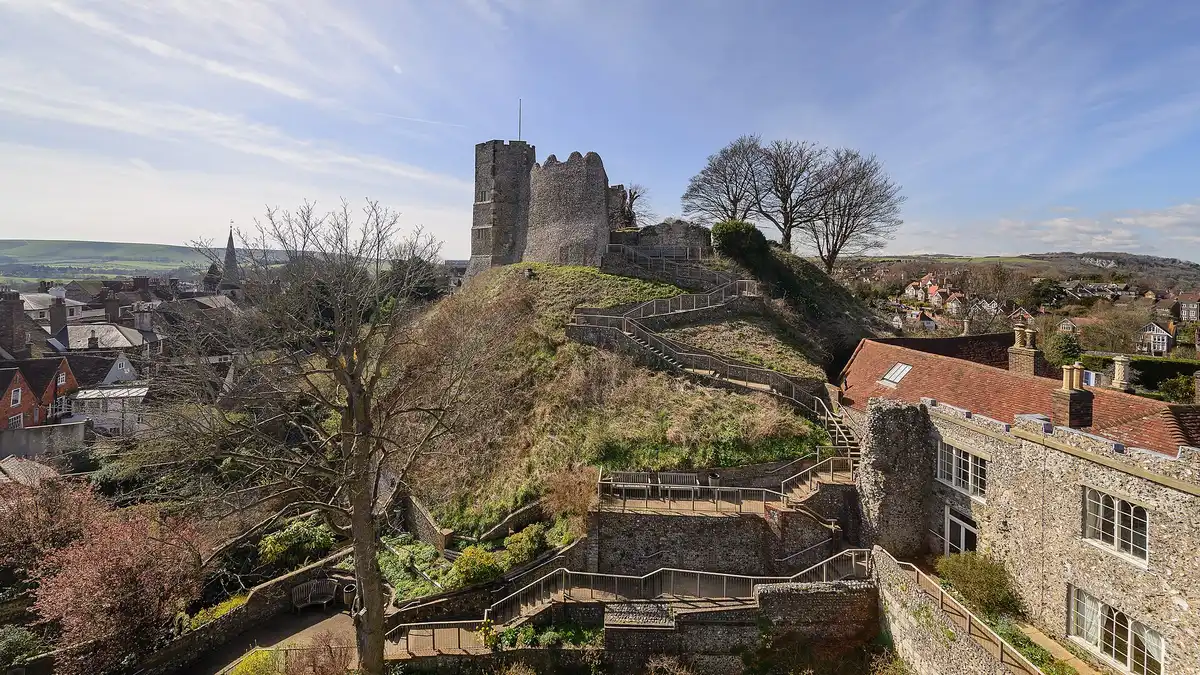
Photo: Arild Vågen, via Wikimedia Commons 
Places of interest
Lewes Castle & Museum
The hilltop castle and museum anchoring the Lewes skyline.
Checked 16 November 2026: OpenStreetMap, its own website and LewesGo.
Sources
Written by LewesGo from the sources below. Opening times, prices and menus change, so check with the place itself before you visit.
- Sussex Past: Lewes Castle and Museum: visiting, the museum and address
- Sussex Past: a short history of Lewes Castle: Norman origins, William de Warenne and the two mounds